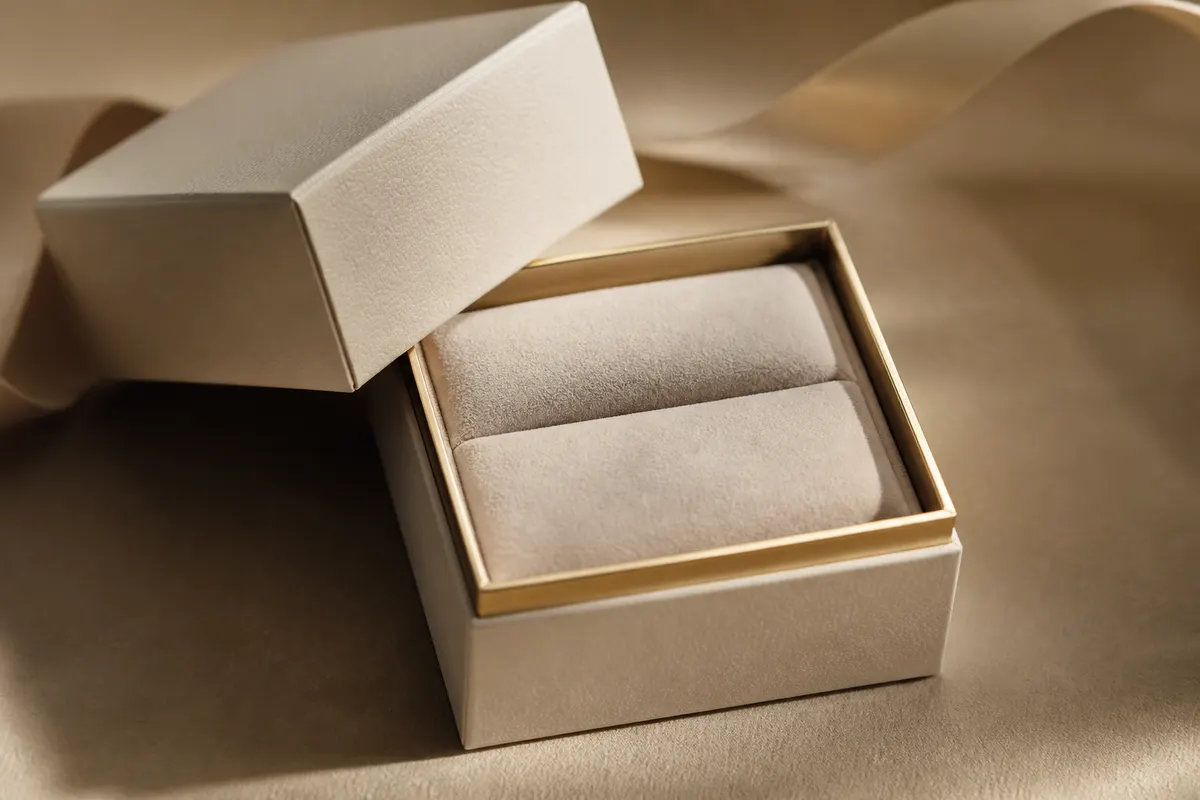
Rigid boxes are the packaging people keep: phone boxes, jewellery boxes, cosmetics gift sets and premium apparel. The most common style is the lid and base box, also called a two-piece or telescope box. Its structure is simple, but the sizes have to fit each other exactly: the lid must slide over the base without being loose, and the paper wrap has to turn over every edge.
This guide explains how a lid and base box is built, which sizes matter, and how to generate the layout from your own dimensions with the free rigid box template.
How a rigid lid and base box is made
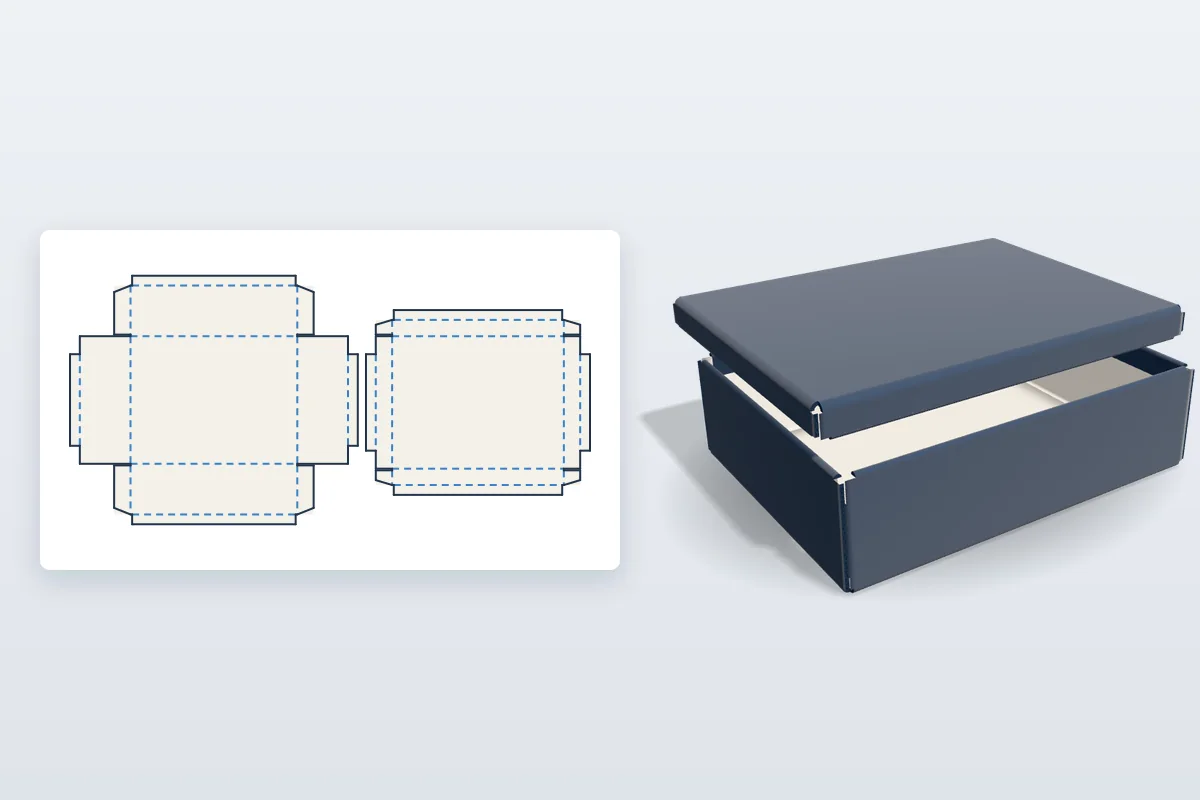
A rigid (set-up) box is not folded from one printed sheet like a carton. It is built from greyboard, usually 1.5 to 3 mm thick, and covered with a printed wrap. Each of the two pieces is a tray:
- A bottom (or lid top) with four walls standing up around it.
- Corner ears that wrap round each corner and are glued inside the side walls, so the corners stay square.
- Turn-ins: the wrap continues over the top edge of each wall and is glued down inside the tray.
- The lid is the same construction, slightly larger, so it sits over the base walls.
The layout you design on is that wrap: the centre panel, the four walls, the ears and the turn-ins. Artwork on the walls has to continue onto the turn-ins, because that is the edge people see when they lift the lid.
The sizes that matter
- Inside size of the base: the width, depth and height of the space your product needs. Measure the product and add a few millimetres, or the size of any insert.
- Board thickness: thicker board makes a sturdier box, and every outside size grows with it. The template builds the walls outward from the inside size for the board you set.
- Lid fit: the lid has to clear the base's outside walls. The template sizes it from the base with 1 mm of play on each side, which is a typical starting point.
- Lid height: a shallow shoulder lid shows part of the base; a full-depth telescope lid covers it completely. Both are the same structure with a different lid height.
- Turn-in depth: how far the wrap folds inside each tray, usually 10 to 20 mm. Deeper turn-ins hide the board edge better but use more paper.
Generate the rigid box dieline from your size
- Open the rigid lid and base box template and pick a preset (jewellery box, cosmetics set, phone or gadget, apparel gift box) or type your inside size in millimetres or inches.
- Open it in the Studio and set the board thickness.
- Adjust the lid height and the turn-in depth in the Sizes panel, or drag them directly on the dieline. Both trays redraw as you change them.
- Place artwork on the outside of the lid and base, and on the inside if you want a printed interior or an unboxing message.
- Fold it in 3D: the base folds up, then the lid turns over and comes down onto the base. Open it again to check how the box looks with the lid off.
Designing for a rigid box
- Put the brand on the lid top. It is the face people see first and the one photographed most.
- Run backgrounds and patterns past the edges onto the turn-ins, so no board shows at the rim.
- Keep text away from the corners: the ears overlap there and the wrap is folded twice.
- Use the inside of the base for a message or pattern; it is the reveal when the lid comes off.
- Rigid boxes are often finished with soft-touch lamination, foil or embossing. Preview the material in the Studio, then confirm the finishes with your box maker.
Rigid box vs folding carton
A folding carton such as a reverse tuck end box is cut and folded from a single printed sheet. It is cheap and flat-packs for shipping, which suits retail cartons. A rigid box costs more and ships assembled, but feels solid in the hand and is kept and reused. For e-commerce, a mailer box sits between the two: one sheet of corrugated board with a hinged lid.
Sending it to a box maker
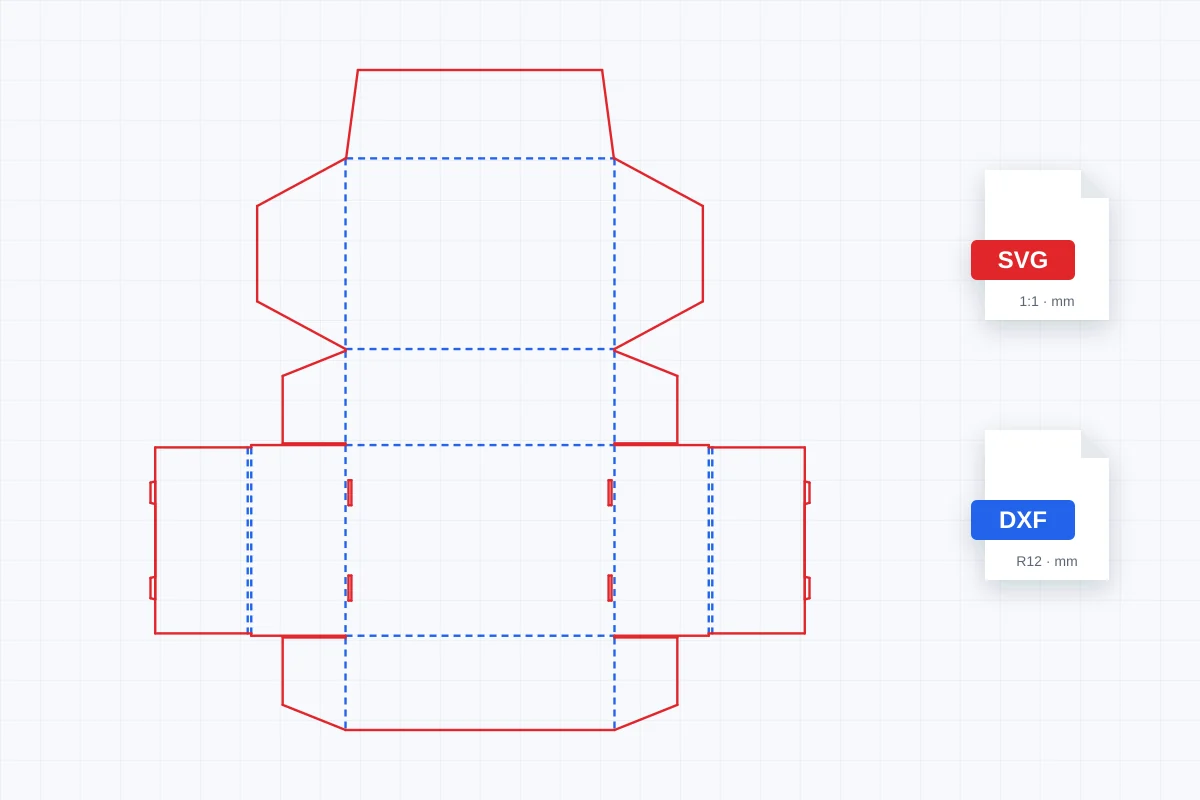
From Preview & Download you can export a 1:1 PDF of the wrap with your artwork, bleed and cut and crease lines, and the cutting template on its own as an SVG or DXF. Rigid box makers work with their own board and wrap allowances, so send them your inside size and the layout, and ask them to confirm the final die.
What is a lid and base rigid box?
A two-piece set-up box: a base tray that holds the product and a slightly larger lid tray that lifts off it. Both are made from thick greyboard wrapped in printed paper, which is what gives rigid boxes their premium feel.
Is there a free rigid box template?
Yes. The rigid lid and base box template in 3D Box Studio is free. Enter the inside size of the base and it draws both trays, with corner ears and turn-ins, and folds them in 3D. Designing and exporting need a free account.
How much bigger should the lid be than the base?
Just enough to slide over the base walls: the base's outside size plus the lid's own board on each side and a small clearance. The template sizes the lid from the base for the board thickness you set, with 1 mm of play on each side.
Can I change the lid height?
Yes. The lid height is an adjustable size in the Studio, from a shallow shoulder lid to a full telescope lid that covers the base completely. The turn-in depth is adjustable too.
Can I download the rigid box dieline?
Yes. Export a 1:1 PDF with your artwork, or the cutting template on its own as SVG or DXF for your box maker.